
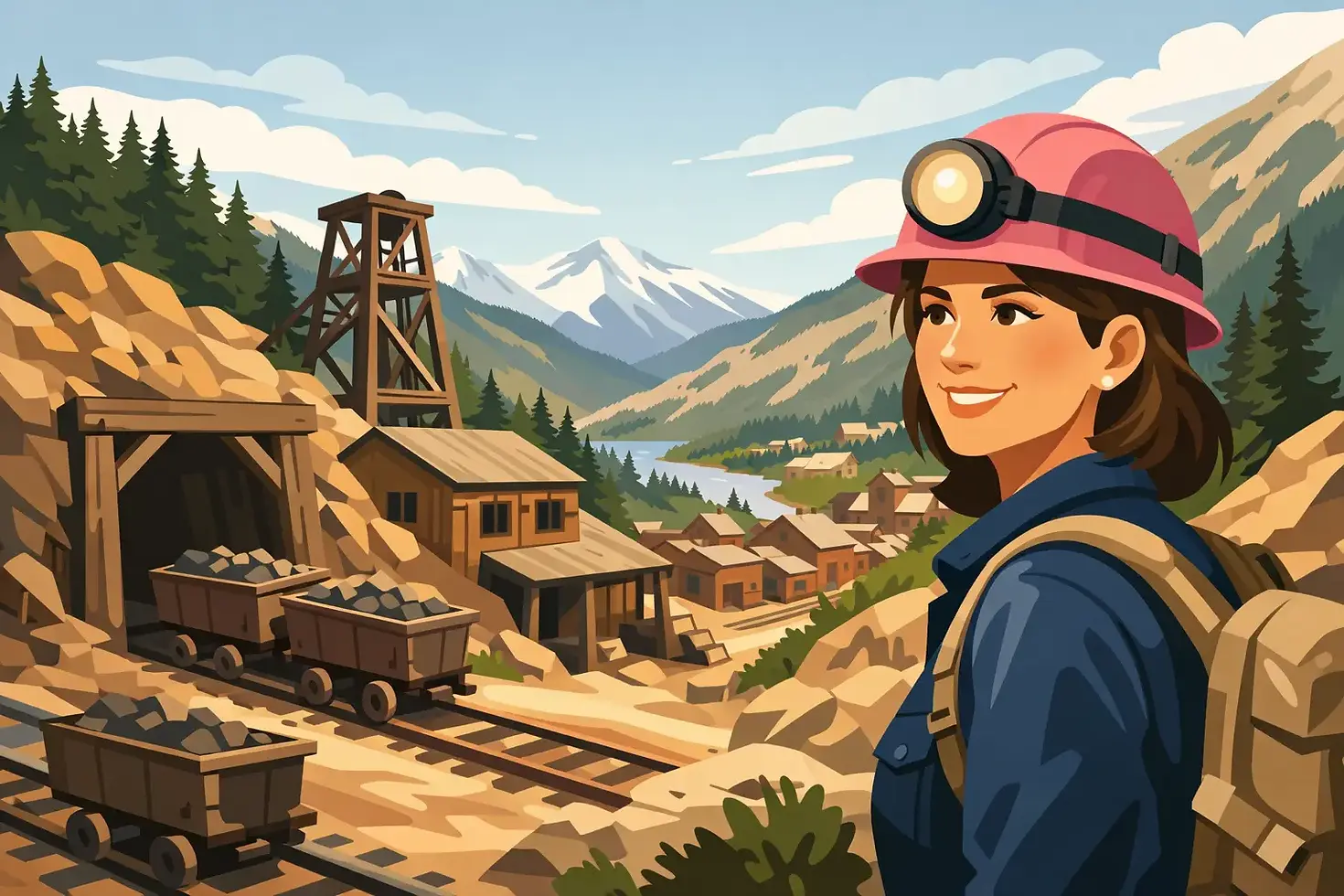
Children Mine Tours: A Real Colorado Adventure
A child holding a piece of ore they helped break open tends to remember more than a date on a museum plaque. That is the difference children mine tours can make: history becomes something families can see in the rock walls, hear in the story of the miners, and hold in their hands. At an active historic mine, the lesson is not staged around the past. It begins underground, in the place where Colorado’s mining story actually unfolded.
For families traveling through the mountains, an underground tour can be a welcome change from another overlook or a weather-dependent outdoor plan. It is also an experience that asks kids to pay attention in a different way. They are entering a working environment with a guide, following a route used by miners, and learning why every tunnel, timber, and mineralized rock face mattered.
What Children Mine Tours Feel Like Underground
A guided mine visit is not a roller coaster, a haunted house, or a polished museum exhibit. It is a real underground setting, and that authenticity is the point. Families travel more than 1,000 feet into the original Capital Prize Mine with a knowledgeable guide who explains the Gold Rush history of the site and the day-to-day work that mining required.
The underground portion is approximately one hour, which is long enough for a meaningful experience without asking younger visitors to sit through an all-day history program. Children hear how miners found ore, moved through narrow workings, supported underground areas, and brought valuable material to the surface. The details help turn a broad idea - “people mined for gold” - into a clearer picture of demanding, skilled work.
Expect a cool underground environment, uneven conditions typical of a historic mine, and a close look at original infrastructure. Those features are exciting for many children, especially when a guide puts them in context. They also mean a mine tour is best approached as a family activity with real-world conditions, not as a free-roaming attraction. Guests stay with the group, listen to safety direction, and move at the pace of the guided tour.
That structure is reassuring for first-time underground visitors. A good guide knows when to explain the big story, when to point out a detail that will catch a child’s eye, and when to answer the questions that inevitably come up: How did miners breathe? Was it dark all the time? How did they know where to dig? Did they find gold here?
A history lesson with texture, sound, and scale
Mining history can seem distant until a child stands beside the rock face and realizes the tunnel was created by people working underground, often with limited light and difficult tools. The scale makes an impression. So does the contrast between the hard-rock mining era and the methods used at an operating mine today.
Families do not need prior knowledge of geology, prospecting, or Colorado history. The strongest tours translate technical ideas into plain language. Ore is not just “gold rock.” It is rock containing minerals that must be identified, mined, crushed, and processed. Gold is valuable, but finding it is only the beginning of the work.
Why Hands-On Ore Activities Matter
For many children, the most memorable part of a mine visit happens after they have heard the story. Breaking ore rock gives them a chance to participate rather than simply watch. Guests can break open mined material and keep a specimen smaller than their fist, turning a family outing into a tangible souvenir from the mine.
This activity has a useful lesson built into it. The rock miners remove from the ground is rarely a finished treasure. It has to be examined, broken down, and understood. A guide can connect that small act of rock breaking to the larger process of ore handling and crushing, showing why mining has always involved both physical labor and careful observation.
Children often notice color, sparkle, weight, and texture before they know the scientific terms. That is a good place to start. A rock that looks ordinary can contain several minerals, and a shiny surface is not automatically gold. Encouraging kids to ask what they are seeing builds curiosity without promising a dramatic strike in every piece of ore.
Hands-on activities also work well for mixed-age groups. Younger children enjoy the immediate discovery, while older kids and adults can ask more detailed questions about mineral identification, ore grades, and how modern mining equipment changes the process. Everyone comes away with a different layer of the same experience.
Active mining connects past and present
Historic mine tours are often strongest when they do more than look backward. Seeing demonstrations of contemporary active mining and ore crushing helps families understand that the methods may have changed, but the central challenge remains: locating valuable mineral material and separating it from surrounding rock.
That connection gives the Gold Rush story more weight. Early miners were not simply chasing a legend. They were solving practical problems underground - water, ventilation, transportation, safety, labor, and processing. Modern operations use different tools and standards, yet they still depend on geology, planning, and hard-won knowledge of the ground.
For school-age visitors, this can bring several subjects together naturally. History explains why mining communities grew in the mountains. Earth science explains the rock and minerals. Engineering appears in the workings and equipment. Math enters the conversation when families consider how much material must be moved and processed to recover valuable ore.
Planning a Mine Tour with Kids
The best family mine tour begins before anyone enters the tunnel. Reservations matter because guided underground visits have limited space and operate on a scheduled format. Booking ahead gives your family a more predictable plan, particularly during busy travel periods and weekends.
Before arriving, explain the experience simply to younger children. Tell them they will go underground with a guide, stay with their group, see real mining areas, and have a chance to learn about the rock that came from the mine. Framing it as an adventure with rules usually works better than presenting it as a test of bravery.
Clothing should be practical. Mountain weather can shift quickly outside, while underground spaces stay cool. Closed-toe shoes with secure footing are the sensible choice, and a warm layer makes the visit more comfortable. Avoid treating the mine as a place for delicate outfits or loose footwear. Families should also be ready for natural underground conditions, including dampness and uneven walking surfaces.
Physical comfort is worth considering honestly. Some children are thrilled by enclosed, dimmer spaces; others may find the environment unfamiliar at first. The guided setting helps, but parents know their child best. If someone is uneasy about enclosed spaces, has mobility concerns, or has a condition that may be affected by underground conditions, ask questions before reserving. A memorable visit should feel adventurous, not overwhelming. The guide can help advise what to do in different scenarios as most concerns can be mitigated.
Parents can help children get more from the tour by giving them a small mission. Ask them to listen for one tool miners used, one problem miners faced, and one thing that surprised them about ore. Afterward, let them explain their answers over lunch or during the drive. That short conversation often reveals how much they absorbed.
Is a Mine Tour Right for Your Family?
For many families, the answer depends less on a child’s age than on temperament and readiness. Curious kids who enjoy asking questions, following a guide, and trying hands-on activities are often excellent mine visitors. Multigenerational groups also benefit because the experience offers shared conversation rather than splitting adults and children into separate activities.
A mine tour may be especially valuable on a Colorado itinerary when you want an activity with substance. The mountains provide the scenery, but underground history explains why towns, rail lines, and communities developed where they did. A guided visit gives travelers a story to carry with them as they continue through the region.
It is not the right fit for every moment. Families seeking an unstructured playground-style activity may prefer something else, and anyone unable to manage the mine’s physical conditions should choose accordingly. But for visitors who want a real setting, clear safety oversight, and a chance to turn curiosity into discovery, an active historic mine offers something rare.
Bring a jacket, bring your questions, and let your children see that Colorado history was built one rock, one tunnel, and one determined crew at a time.


Comments