
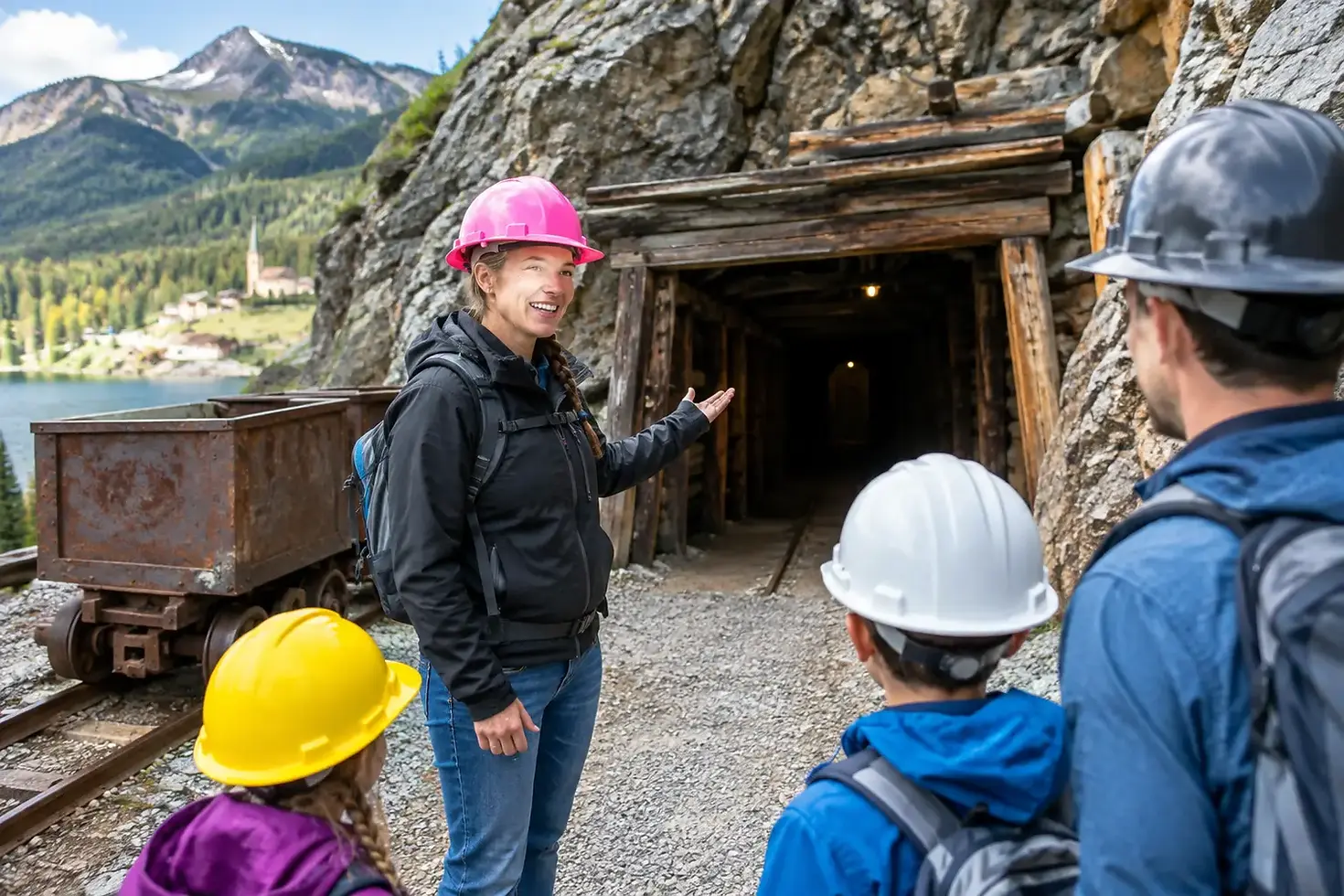
Underground Tour Accessibility Guide for Families
A real mine is not built like a museum hallway. Its passages follow the rock, its floors reflect decades of working use, and its historic character is part of the experience. This underground tour accessibility guide helps families, travelers, and group organizers decide whether a guided mine visit is a good fit before they reserve a spot.
At Capital Prize Gold Mine Tours, guests travel more than 1,000 feet into an original Colorado gold mine with a trained guide. The experience is designed to make mining history understandable and exciting, but it also takes place in an authentic underground environment. Knowing what that means physically can turn a first mine tour from an uncertain plan into a memorable mountain adventure.
What accessibility means inside a historic mine
Accessibility can mean different things to different visitors. For one guest, it may mean avoiding long walks. For another, it may mean managing uneven footing, limited headroom, sensory concerns, mobility equipment, breathing conditions, or a child who is nervous in enclosed spaces.
An underground mine has practical limits that a modern attraction may not. Historic tunnels are narrow in places, built into natural rock, and maintained as working mine spaces rather than reconstructed indoor exhibits. Conditions can change with mining operations, weather, and safety requirements. For that reason, the best accessibility information is always specific to the visitor and the scheduled tour.
A guided mine tour is approximately one hour, but visitors should plan for the full arrival, check-in, safety briefing, and activity time. Families often find that a calm pace before the tour helps children settle in and gives adults time to ask staff any last-minute questions.
Walking, footing, and physical conditions
Visitors should expect to walk through underground passages and stand with the group while the guide shares the history of the mine and explains mining methods. The ground may be uneven, damp, rocky, or dusty in sections. Surfaces are not the same as paved sidewalks, and sturdy closed-toe shoes with good traction are the right choice.
The tour is guided, which means guests do not need mining experience or technical knowledge. Your guide sets the pace, points out areas that require attention, and provides safety direction along the route. Still, guests need to be comfortable moving through a real underground setting and following instructions around historic infrastructure and active mining equipment.
If a member of your party uses a cane, walker, wheelchair, mobility scooter, or other mobility aid, contact the mine before making plans. The key question is not simply whether an item can enter a tunnel. It is whether the current route, ground conditions, turning space, and safety procedures can support a safe and worthwhile visit that day. Staff can explain the conditions honestly and help you avoid arriving with expectations the mine cannot safely meet.
Visitors with balance concerns should also ask about the route in advance. A short experience can still be challenging when the terrain is irregular. A hand on a companion's arm may help some guests, but it is not a substitute for being able to navigate the route independently and safely.
Historic character comes with trade-offs
The same features that make an underground tour memorable can create access challenges. Timber supports, rock walls, original workings, narrow spaces, and variable ground bring visitors close to the world of Colorado miners. They also mean the mine cannot promise the smooth, wide, level pathways found in a modern visitor center.
That trade-off is worth considering before you reserve. If a guest is likely to be uncomfortable or unsafe on uneven terrain, a surface-level activity or another part of the day's itinerary may be the better choice. A good family outing is one where everyone can participate with confidence, not one where someone feels pressured to push through conditions beyond their comfort level.
Temperature, clothing, and comfort underground
Underground temperatures tend to feel cooler than the weather outside, especially after a sunny mountain drive or an afternoon spent exploring Georgetown. Bring a jacket or warm layer even when the day begins warm. Layering works better than relying on one heavy coat, because comfort can vary from person to person.
Wear closed-toe shoes, and choose clothing that allows easy movement. Leave loose items that could catch or distract from safe footing behind. Guests who are sensitive to dust, damp air, or cooler temperatures should factor those conditions into their decision and speak with staff ahead of time if they have questions.
Mine environments can also be sensory experiences. There may be low light, echoes, mineral smells, machinery sounds, and a feeling of being enclosed by rock. Some children find that thrilling. Others may need a clear explanation before entering. Tell younger visitors that they will be with a guide, that the group stays together, and that the mine is a real place where people worked to find and process ore.
Claustrophobia, health needs, and younger visitors
A visitor does not need to be an adventurer to enjoy a mine tour, but they should be comfortable with enclosed underground spaces. If someone in your group has claustrophobia, panic concerns, or anxiety around darkness, talk through the experience before the reservation. Looking at the visit as a guided walk through historic tunnels, rather than an unknown underground challenge, can help some guests decide whether it feels manageable.
For medical conditions, the right choice depends on the individual. Consider mobility, breathing comfort, stamina, medication needs, and the ability to follow a guide's directions in a mine setting. The mine team can describe the general experience, but visitors and caregivers are best positioned to judge personal health needs.
Families with children should think about attention span as well as physical ability. A one-hour tour can be a strong fit for school-age learners who enjoy stories, rocks, machines, and hands-on discovery. The ore rock breaking activity gives many children a satisfying way to connect the underground story to a specimen they can take home, provided the activity is appropriate for them and they follow staff direction.
Children may be especially excited by the idea of finding gold, seeing ore crushed, or stepping into a real mine. Set expectations that the tour is an active learning experience, not a playground. Staying with the group, listening at safety stops, and watching where they step are part of the adventure.
Plan ahead for groups and special requests
Reservations matter because underground tours have limited space and are led in small groups. If you are organizing a multigenerational family outing, school group, or group of 10 or more, raise accessibility questions early. Advance communication gives staff the best chance to explain current conditions and help you plan a visit that works for the group.
When you call or inquire, share the details that affect the experience: the guest's mobility needs, whether they can manage uneven walking surfaces, any concerns about enclosed spaces, and whether a support person will be accompanying them. It is also useful to ask what clothing and footwear are recommended for the season and whether the current route has any unusual conditions.
Avoid vague questions such as, "Is the mine accessible?" A more useful conversation is, "Can a guest who walks slowly on uneven ground participate safely?" or, "Would this route work for someone who cannot use stairs or stand for long periods?" Clear details lead to clear answers.
A practical way to decide
Before reserving, picture the whole experience: arriving at the mine, walking underground with a guided group, standing at interpretation stops, moving over natural mine surfaces, and returning to daylight. If that sounds exciting and manageable for everyone in your party, you are likely preparing for a memorable piece of Colorado mining history.
If there is uncertainty, ask before you travel. An honest conversation about the current mine route is the best accessibility tool available. It protects guest safety, respects the working character of the mine, and helps every visitor choose an adventure they can truly enjoy.


Comments